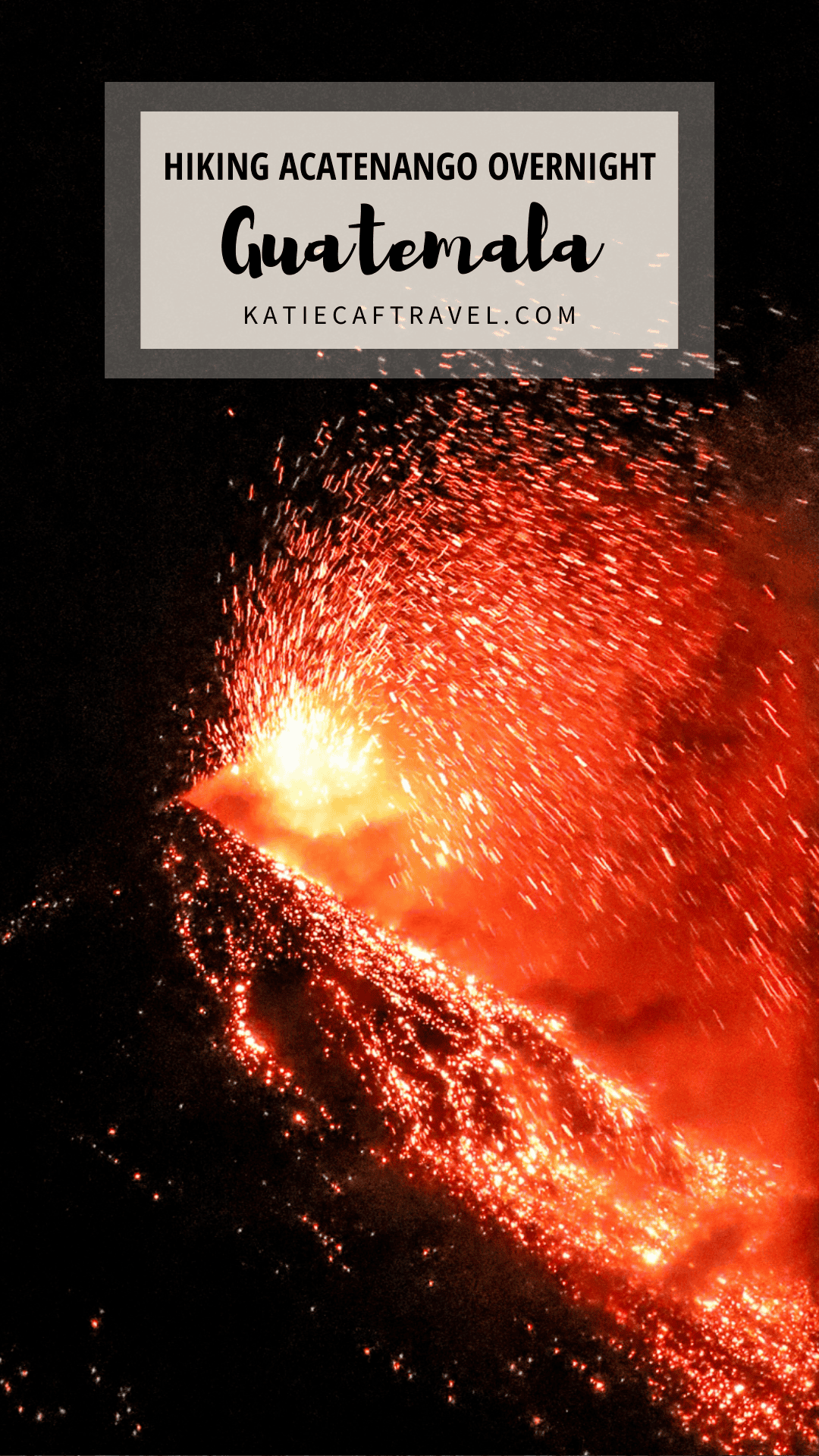
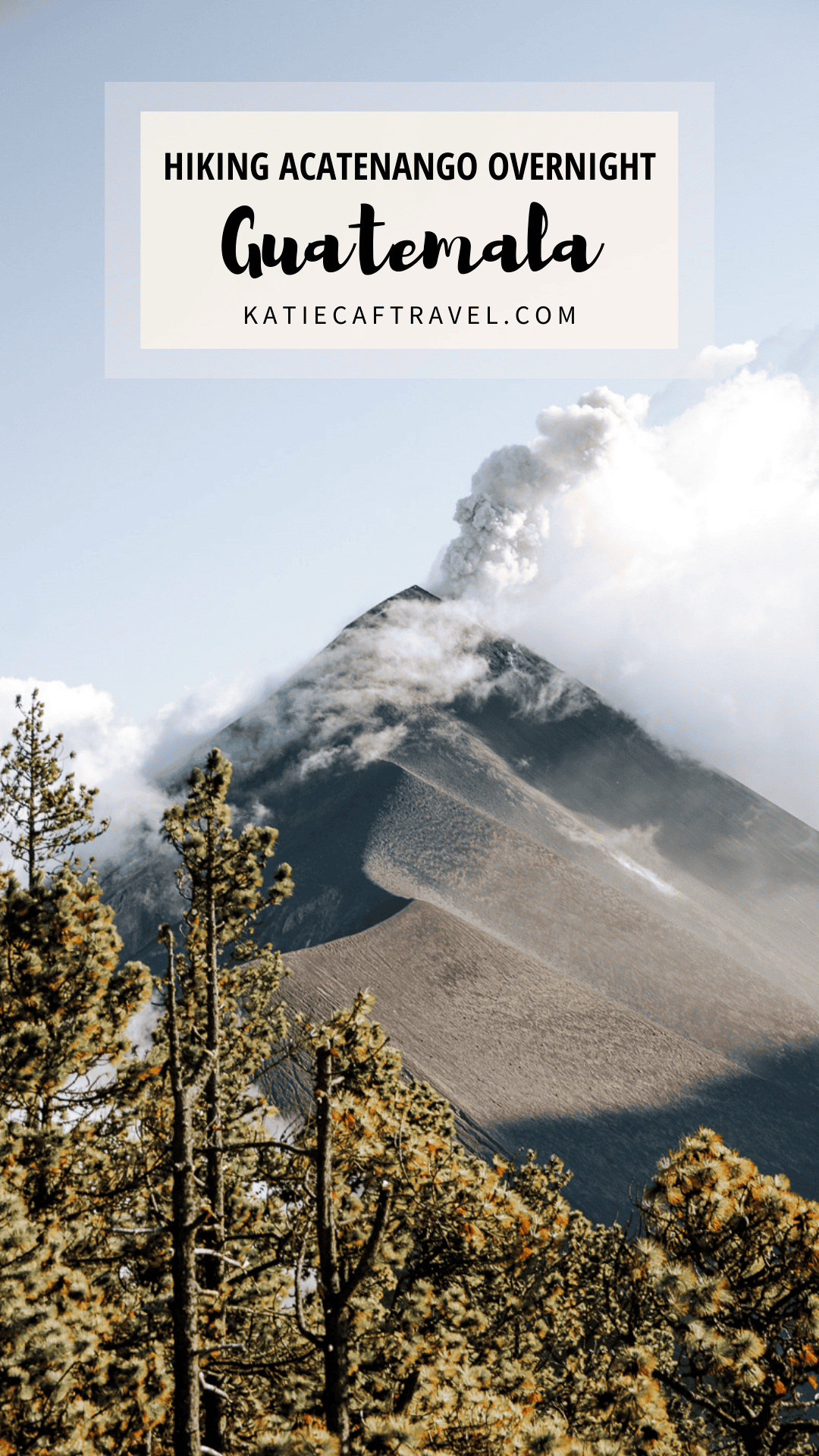
Hiking Acatenango Volcano & Camping Overnight to See Live Lava

In Guatemala, there are a lot of volcanos (almost 300!); and right outside of the cultural capital of Antigua there are two perfect for hiking. One, Volcan Fuego, is active and constantly erupting – the other is Acatenango, this is the one most people hike to have a perfect view of Fuego as it goes off. Trekking to the base camp at Acatenango is the most memorable thing I did in Guatemala, but also an extremely challenging hike.
✔️ Quick Guide
- 💵 Price: $30-150 pp depending on tour service (I did a cheap one)
- 📍Location: Tours depart from Antigua
- ⏳ Duration: 2-days / 1-night
- 👉 Note! Consider altitude medication
- 🥾 Difficulty: DIFFICULT
- 🐎 If you struggle hiking: You can take a horse up for $70.
- 📋 Bring: Change of base-layers, hiking shoes, headlamp, cash, chapstick.
- 🏆 Best tour company: I recommend Wincho & Charlies

Overnight Hike Itinerary
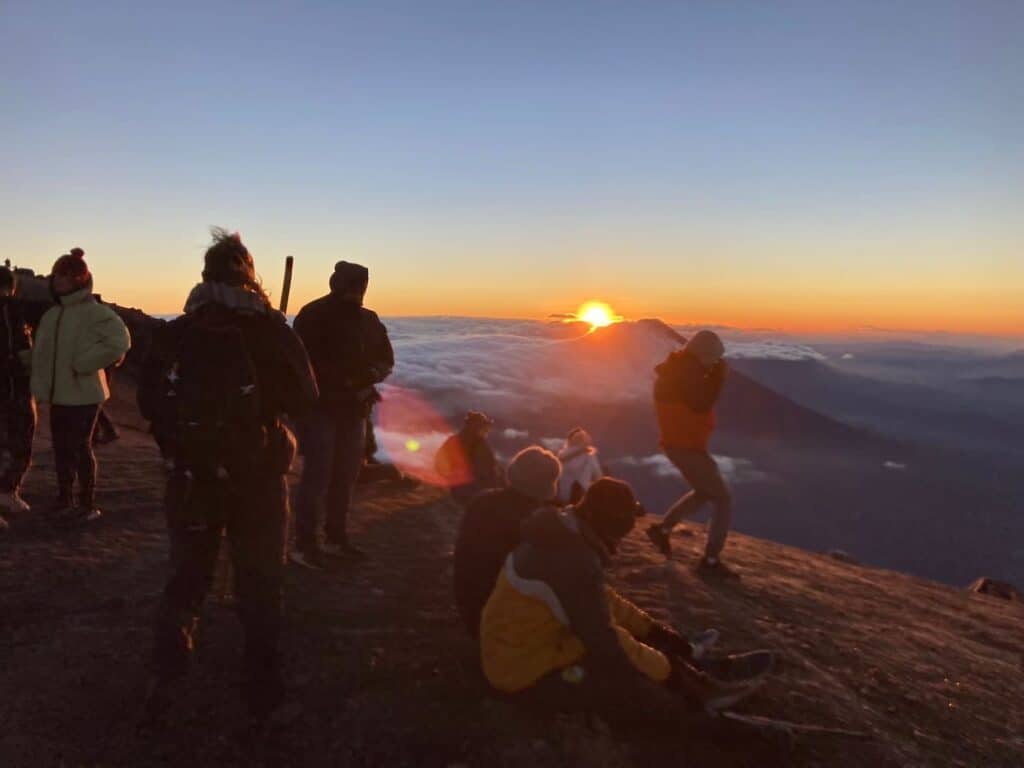
The most common itinerary for this hike is you leave the morning of day 1 from Antigua to the base of Acatenango, hike up to a base camp with a view of Fuego, and then you have the option to do an additional (much harder) hike to the base of Fuego. No one can summit Fuego, because it’s constantly erupting, but you can get really close to where the lava is. The next day, if the weather allows, you can do an additional hike to the top of Acatenango and watch the sunrise over Fuego. This is supposed to be the best part of the hike, but the wind can sometimes be too strong to reach the summit.
Day 1
- 8:00 AM – hostel/hotel pickup
- 9:00 AM – arrive at the office for debriefing and to get warm clothes
- 10:00 AM – start the hike!
- 12 – 1 PM – lunch
- 3 – 4 PM – arrive at Base Camp
- OPTIONAL – 5:30 depart for 4-hour night-hike to Fuego volcano
- 7:30 – dinner for everyone who didn’t go on the night hike
Day 2
- OPTIONAL – 5:00 AM – sunrise summit of Acatenango
- 7:00 AM – breakfast
- 8:00 AM – start hike down
- 11:00 AM – arrive at the office
- 12:30 PM – arrive in Antigua
DAY 1: Departing from Antigua
We were picked up at 8 AM from Yellow House Hostel in Antigua – luckily for us, our hostel provided a great breakfast, if your hotel/hostel doesn’t have breakfast before 8 make sure to eat before starting the hike! We didn’t get any food until lunch. The drive up to the Tour office at the start of the trail was fun and social, 8 AM isn’t too early (I’ve done a lot of hikes that start at 2 AM!) and everyone was excited.
Pre Hike Debriefing & Picking Out Gear
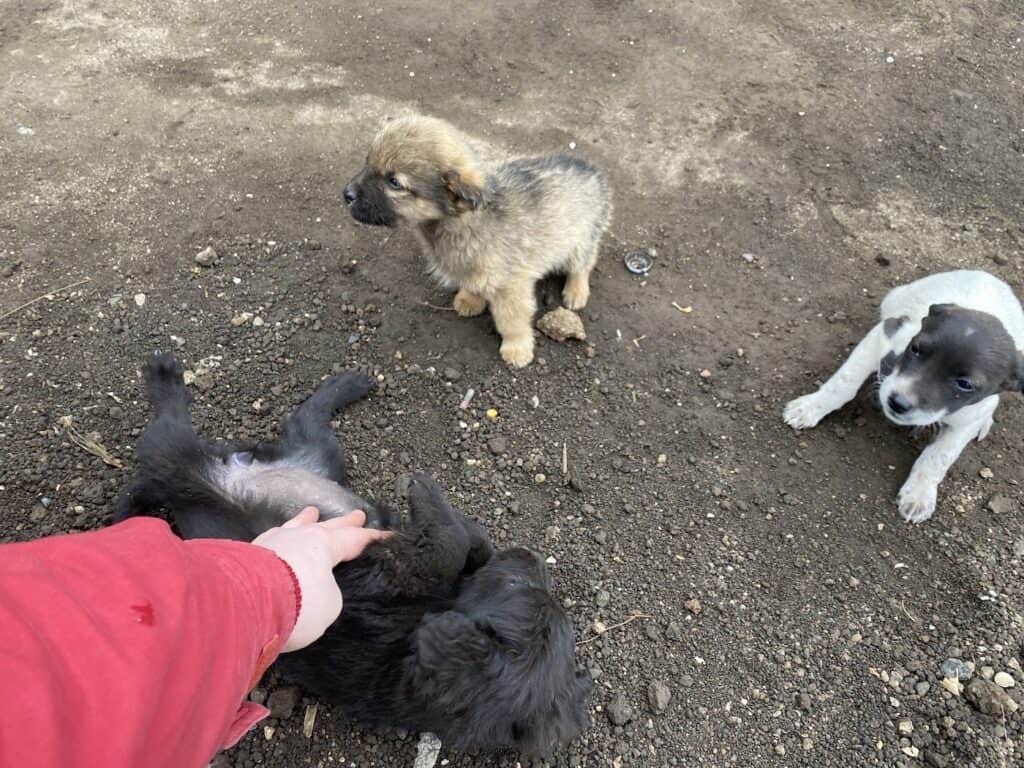
Once we arrived at the office we were greeted by at least ten puppies. No joke. It was the best way to start a hike. Then the head of the company, debriefed us on the hike and the rules and told us about how bitterly cold it gets up at base camp. He advised us to take a pair of all the layers the company provided: a big jacket, extra pair of pants, a hat, gloves, and a scarf.
What followed was a mad dash for everyone to get the winter clothing. The (approximate) 20 people in our group squished into a tiny room where two women were running a counter giving out clothes, there was no talk of sizes or anything, you would ask for a pair of pants and they would throw some pants in your direction. If those didn’t work, you’d have to squish through the mass of people online for clothes and try again. All of the items were mismatched, most in bad condition – zippers not working, some coats were child-sized, one hat they gave me was covered in glue! But they never ran out, and everyone wound up with enough layers.
Lunch Break (Don’t Get Too Excited!)
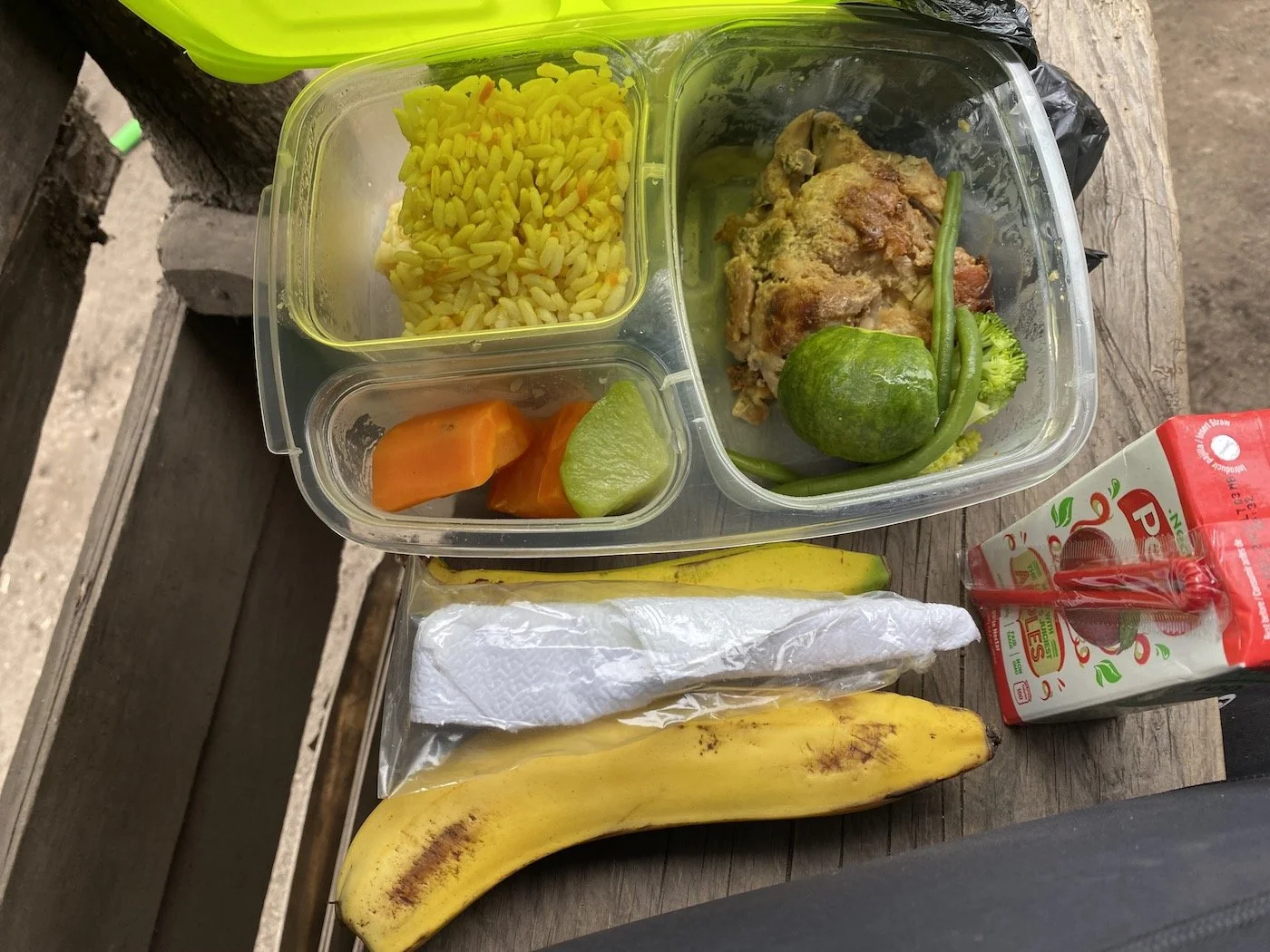
They also gave us our lunches before we started the hike. They asked if anyone is a vegetarian before they start preparing them – even if you’re not a vegetarian, I highly recommend getting the vegetarian meal! Our budget tour flyer advertised “3 hot meals” – meaning lunch on the first day, dinner, and breakfast the next morning. I had thought this meant someone would greet us with lunch at some stops along the way where there was cooking or something, nope! They make the hot lunch for you at 9 AM, and then you hike with it for 3-4 hours, by which time it is then a freezing lunch. The bone-in chicken thigh they gave me turned rock hard in the weather! We also didn’t have any cutlery, just a plastic fork, so it was really hard to eat this style of meal. I wound up giving the chicken to one of the mountain dogs and just ate the rice. Luckily, the altitude killed my hunger, or I would have been starving after 4-6 hours of hiking with just some rice.
Note: There is no trash before base camp, so you need to carry all your wrappers and stuff from lunch with you the rest of the way up – don’t litter!
The Hike Up Was Difficult
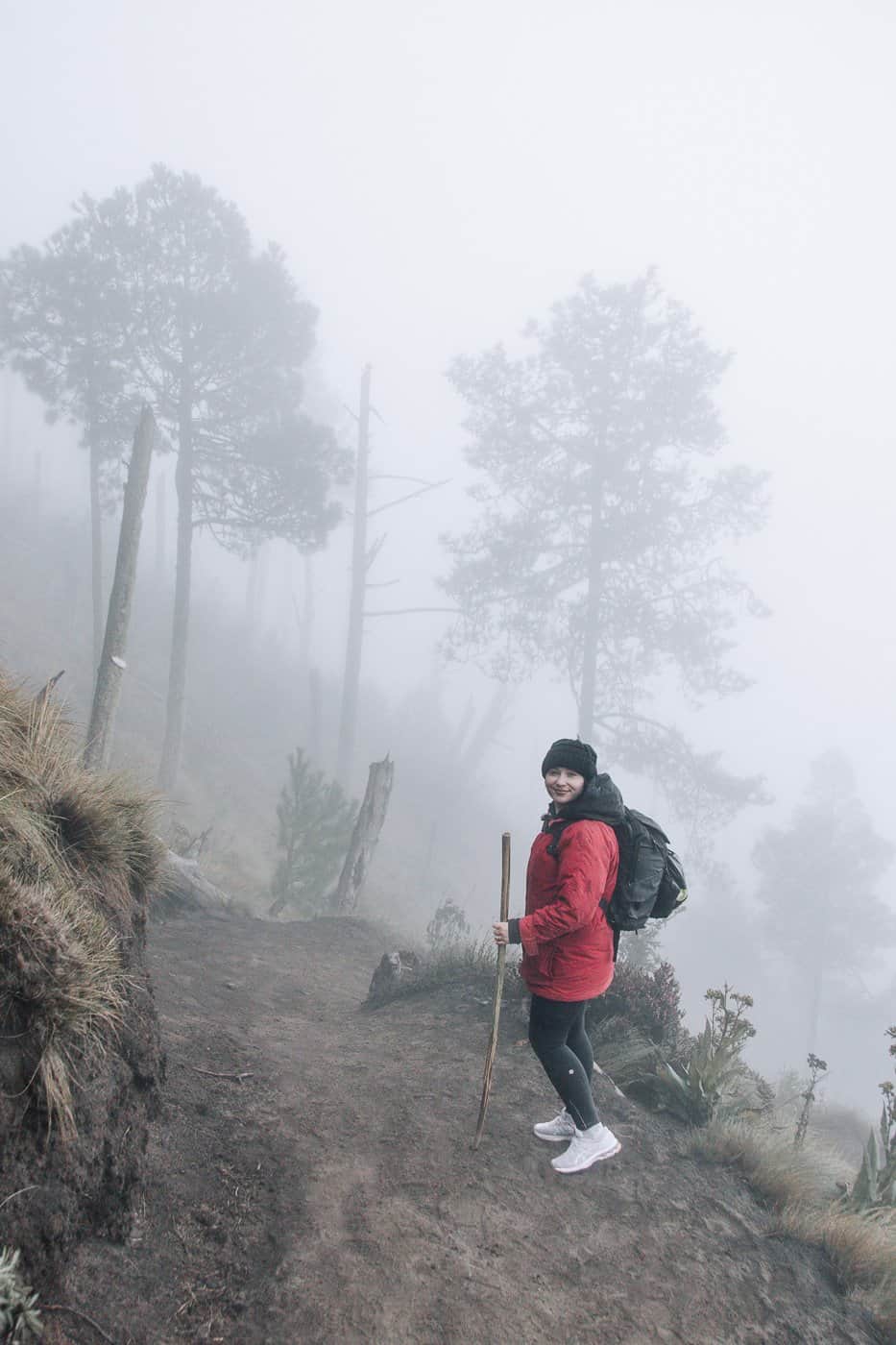
They also sell walking sticks whittled by the locals before you start out for 15 Q ($2) – you need these. Trust me. The ground is super slippery both going up and coming down, the people in our group who had the best time brought 2 professional hiking poles and hiking shoes, but we made do with the whittled sticks and sneakers!
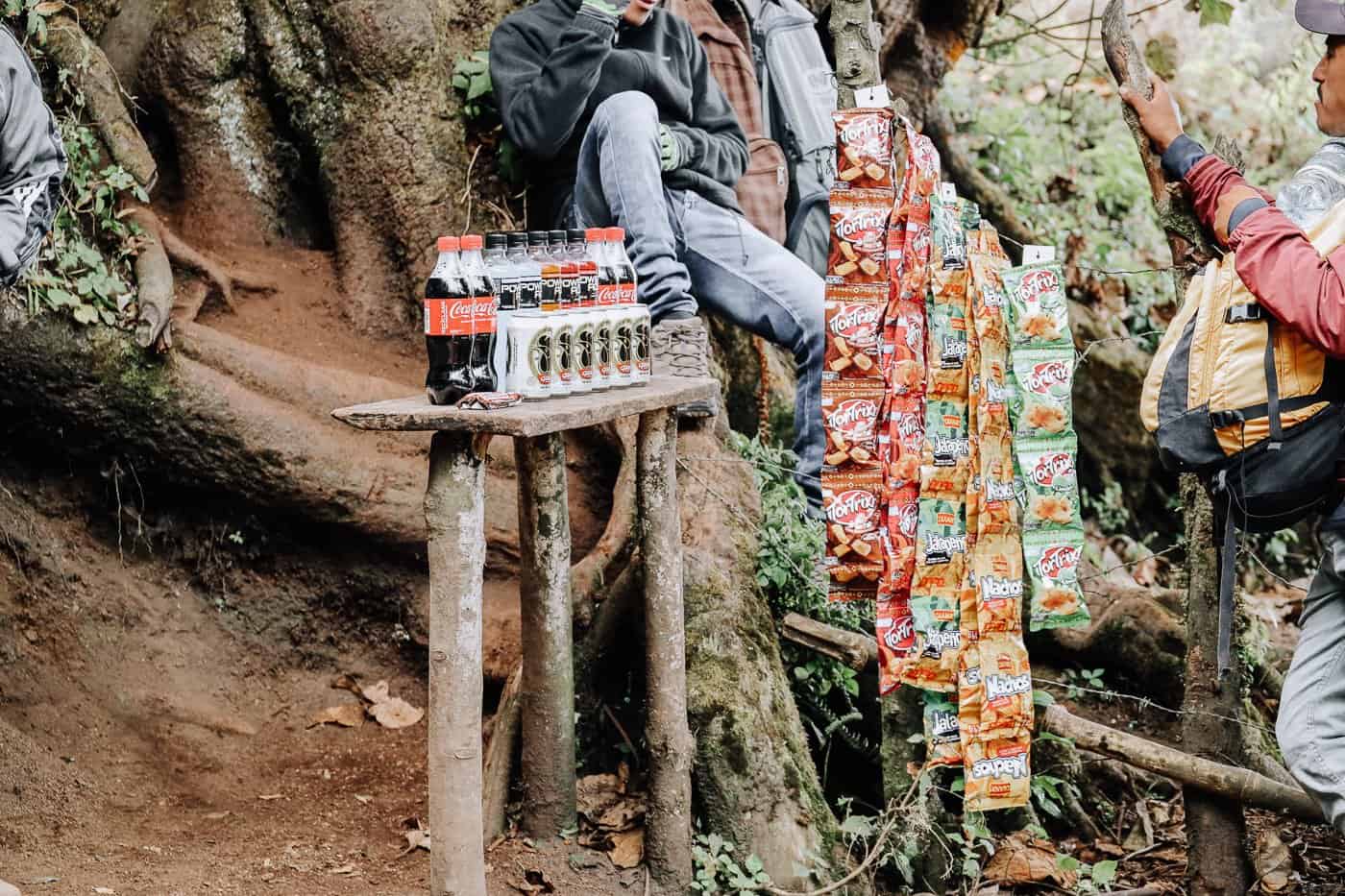
Around every 45 min to 1 hour there is a rest stop, the hike starts out super steep up until the first rest stop. My friend didn’t train at all for the hike, and she quickly realized she wasn’t up for it so we fell behind the rest of the group waiting for the guides to call her a horse. You can take a horse up almost the entire way instead of hiking if you want, it’s 500 Q ($65) each way.
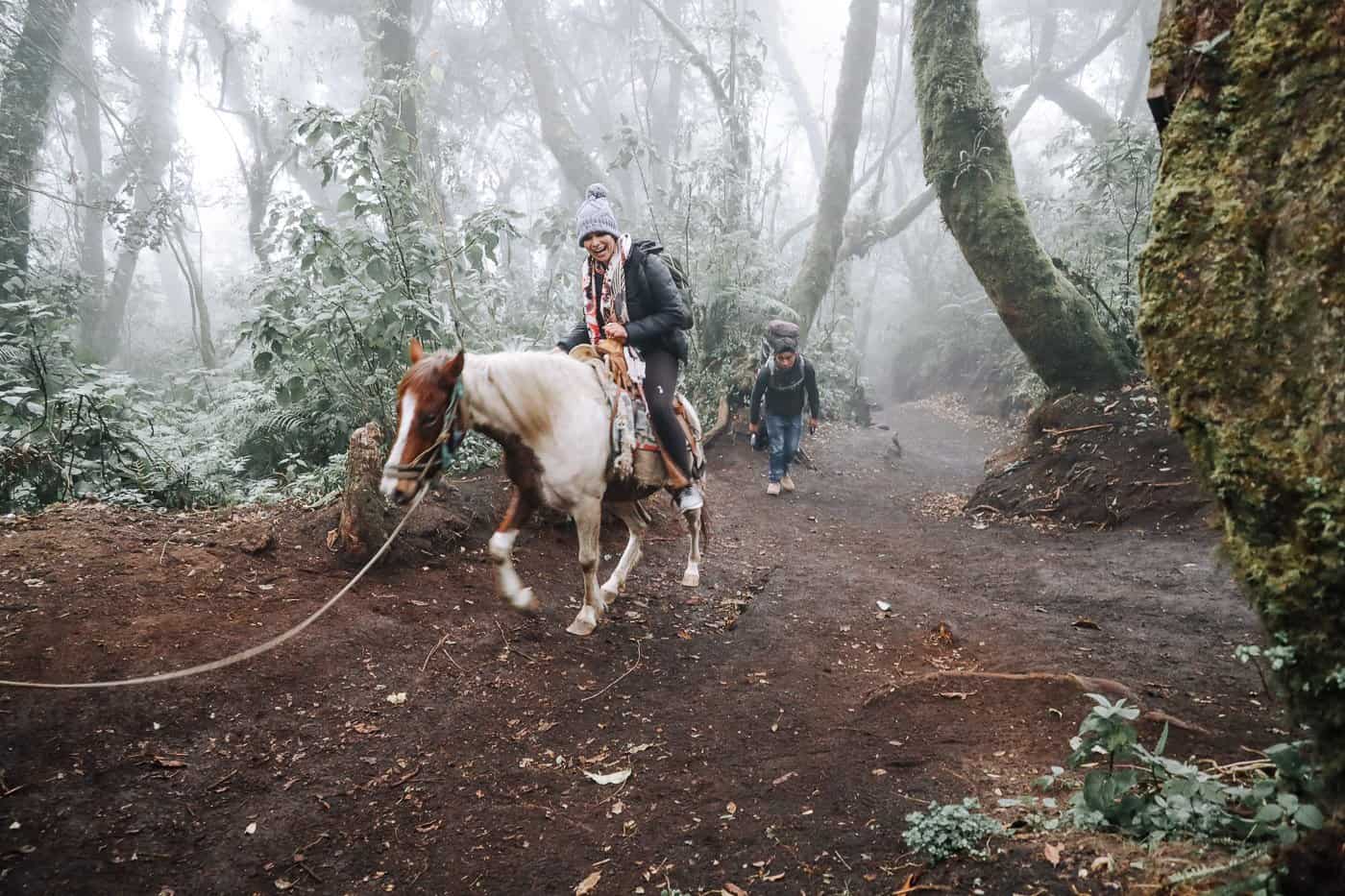
After she left on the horse we were way behind the rest of the group, so I actually did the hike mostly solo and tagged along with the Tropicana Tours group after lunch. One of the good things about the tour companies in regards to safety is they have multiple guides with the tour group, one at the front, middle, and at the end – so I wasn’t alone trying to figure out how to find the camp.
Lots of people do this hike without a tour guide, I had read that it’s not allowed online but that’s not true at all! People hike up with their own tents and equipment without a guide all the time, it’s a super easy straight path on the trail the whole way so I didn’t feel like my guide was necessary at all, but I’m happy we booked a tour because they provided a base camp, transportation, and all our gear.
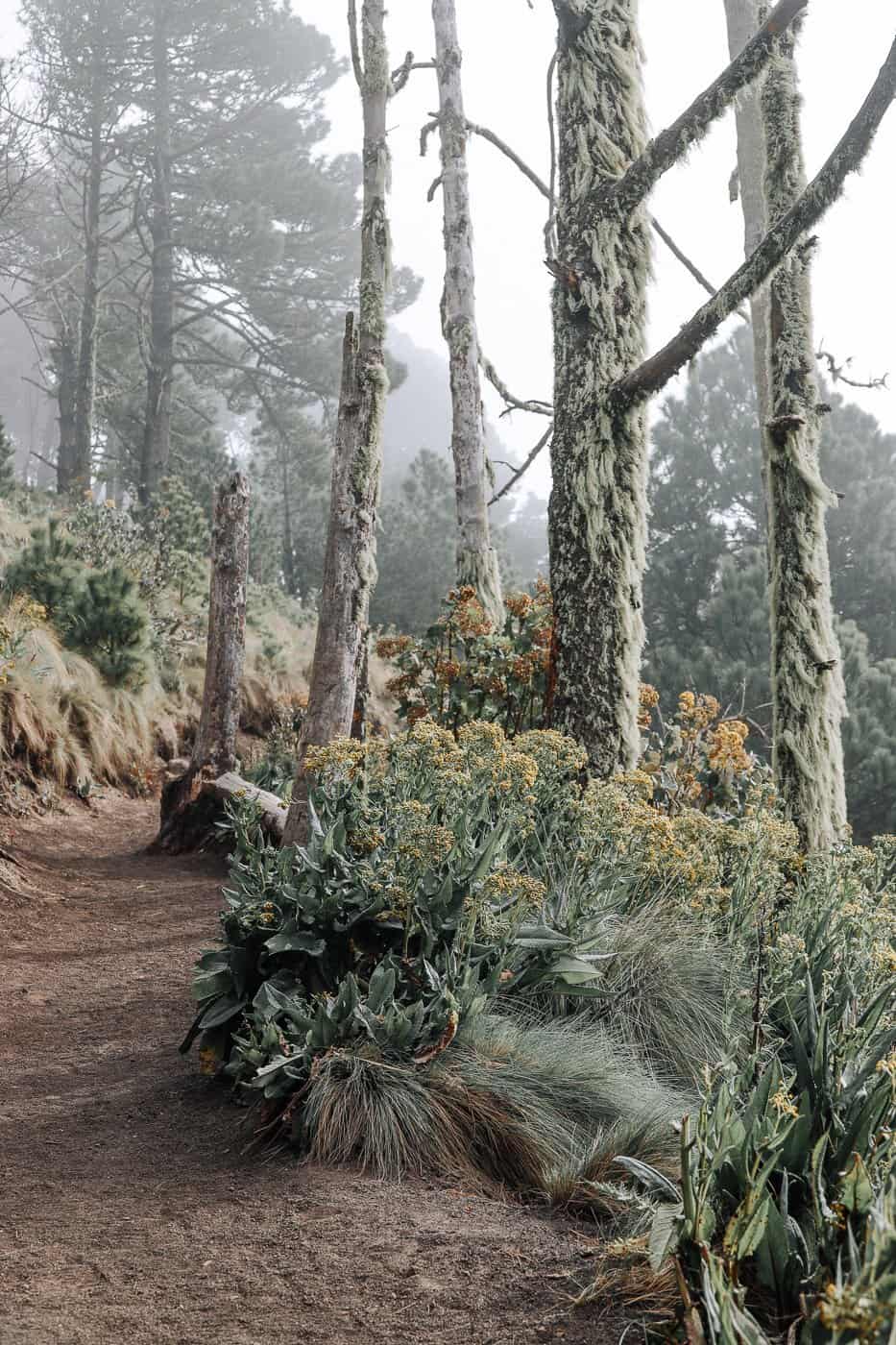
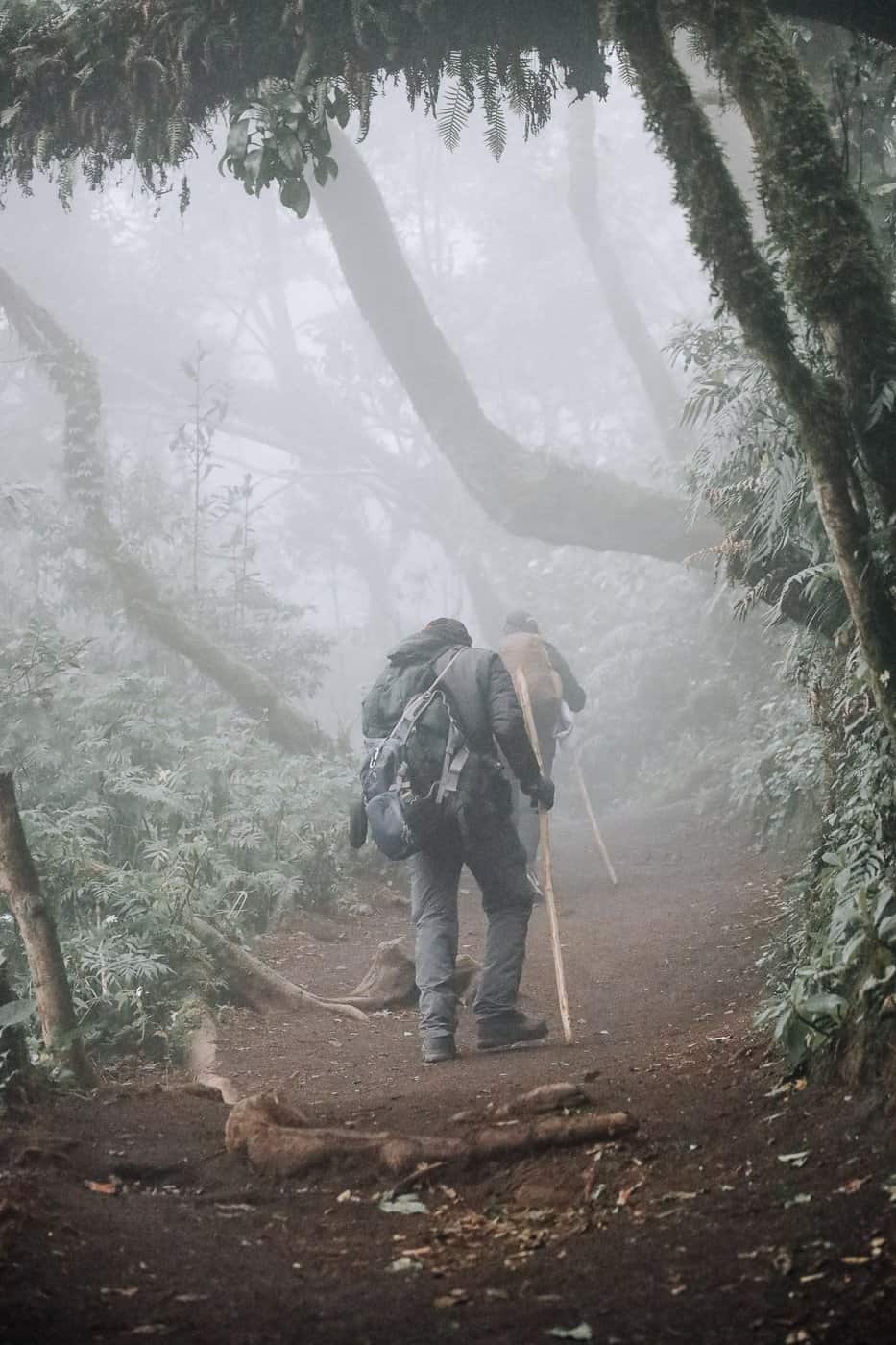
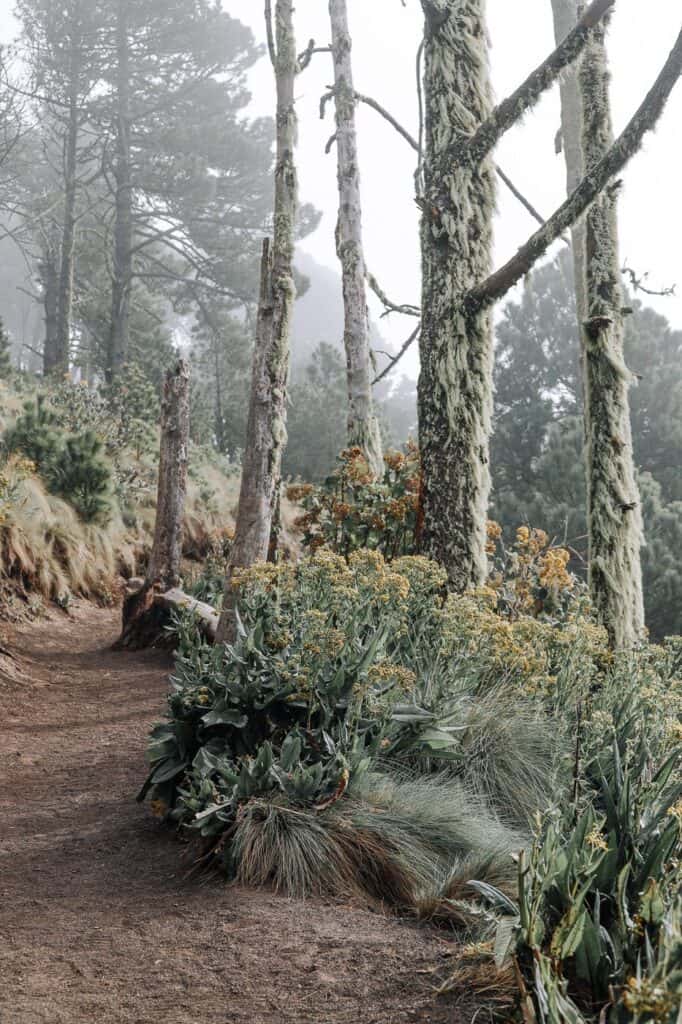
There isn’t much to see on the hike up! The terrain changed after the first rest stop to be almost like a rainforest, I couldn’t see anything through the dense greenery and fog until we were almost at the base camp.
I’m not gonna lie, this hike was hard for me, but I never had the “I want to give up” feeling I had while climbing Mt. Pichincha in Ecuador, so it wasn’t unbearably hard. Even with the altitude meds, I was affected by the thinning air as we climbed higher. My guide was really understanding when I would ask for a quick 3-second standing break every 30 seconds or so just to catch my breath, but I really wish I had trained better before the hike because it would have made the experience much more enjoyable.

“Zona Peligrosa” AKA Zone of Danger
Around an hour from base camp, there’s the “zona peligrosa” or “dangerous area” but it’s just climbing a few stairs – after that, it’s more of the same, there’s barely any rock scrambling just for a few minutes right before base camp.
Only the head of the tour company spoke English, and he didn’t come on the tour with us. Since I was basically solo-hiking most of the time after my friend left on a horse I got to practice my Spanish with my guide, which I loved! But if you don’t know any Spanish I highly recommend downloading Spanish offline on Google Translate so you can communicate while on the tour.
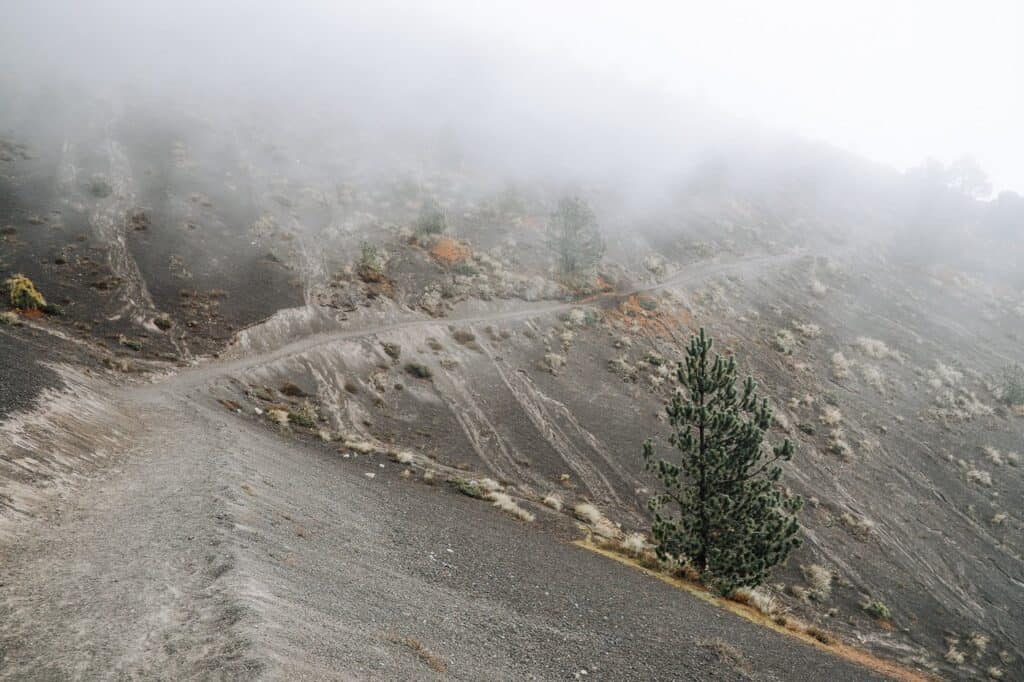
Reaching Base Camp
Right before basecamp, the inclines get much gentler, the dirt is dark volcanic ash, and everything was swathed in a thick mist. My Guide, Tomo, said this was the “área fácil” or easy part. Every once in a while the mist cleared a bit to see the teeny tiny lights of the city we had hiked up from.
Reaching base camp, finally, was such a great feeling! I love the sense of accomplishment after a hard hike. Base camp is at 2600 meters altitude, so it’s not the highest I’ve ever been – but usually, I climb up, summit, and then immediately start the descent. I’ve never camped at a high altitude before and the exhilaration of reaching our destination was clearly replaced with the feeling of being freezing. I had done the entire hike in leggings, a tank top, a t-shirt, and my puffer jacket; this was more than enough layers while we were hiking and our heart rate was up but once we stopped moving, even for a few minutes, the temperature got to me.
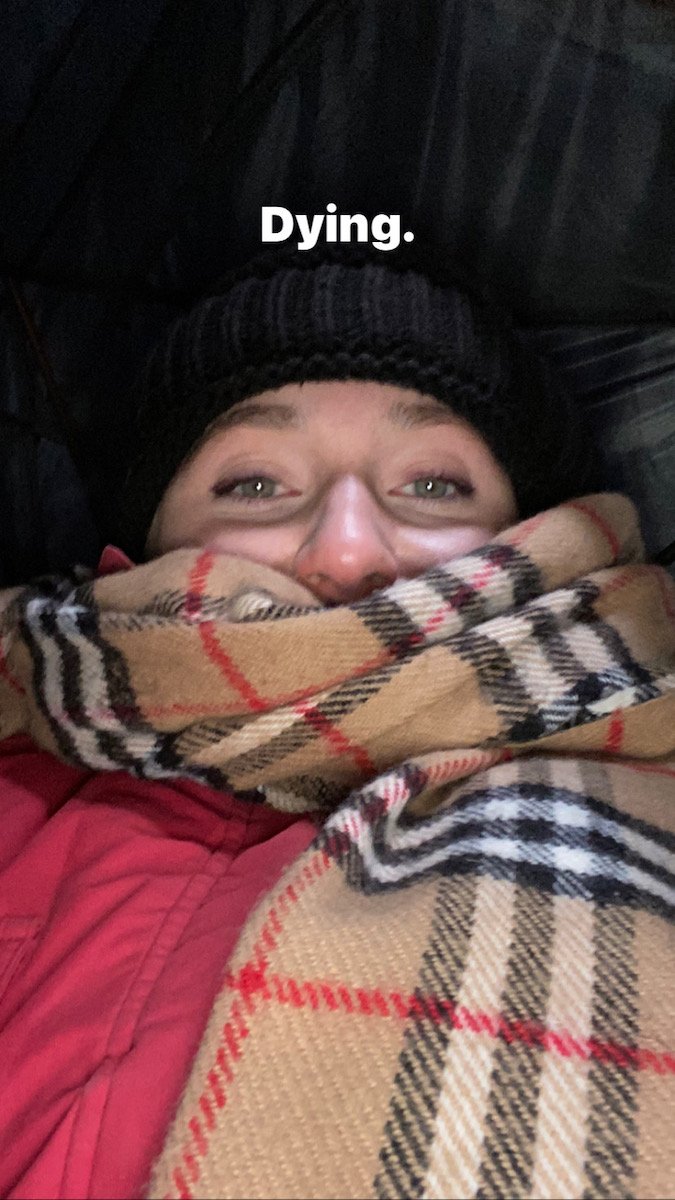
The Altitude Really Got to Me
I put on all the layers provided by the tour company and was still freezing! This is because the sweat from the hike had made my base layers damp, and then once we reached high altitude the dampness froze, so I had to change my base layers stat into something dry or risk hypothermia. All of this to say, bring a change of base layers!!! We weren’t provided with them, and a lot of inexperienced hikers I talked to on the hike weren’t bringing a change of clothes to save room in their bags.
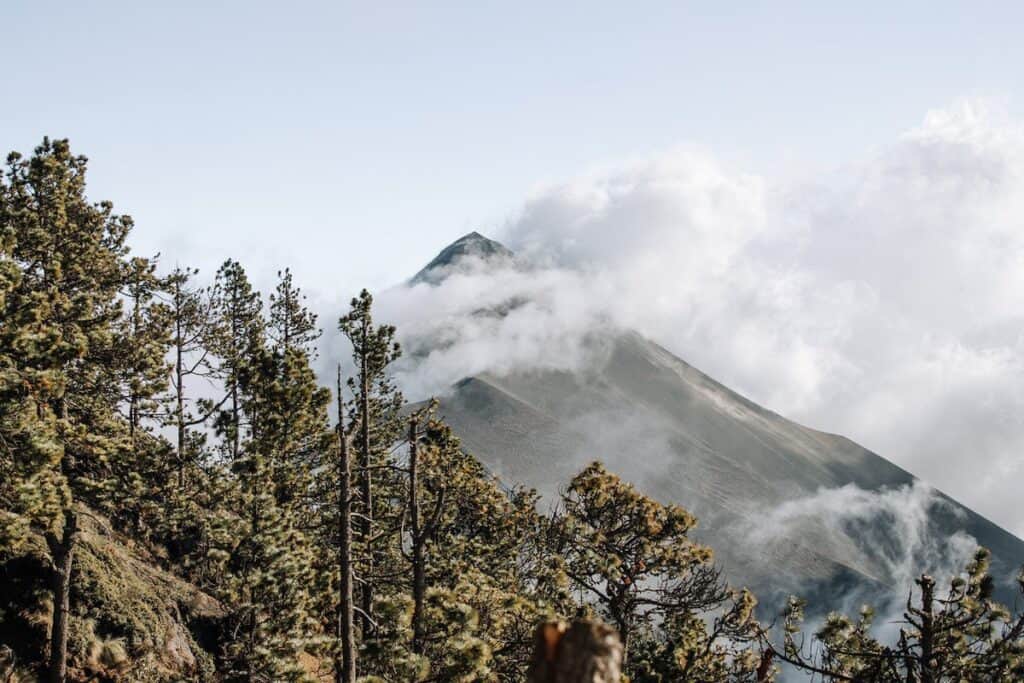
At Base Camp
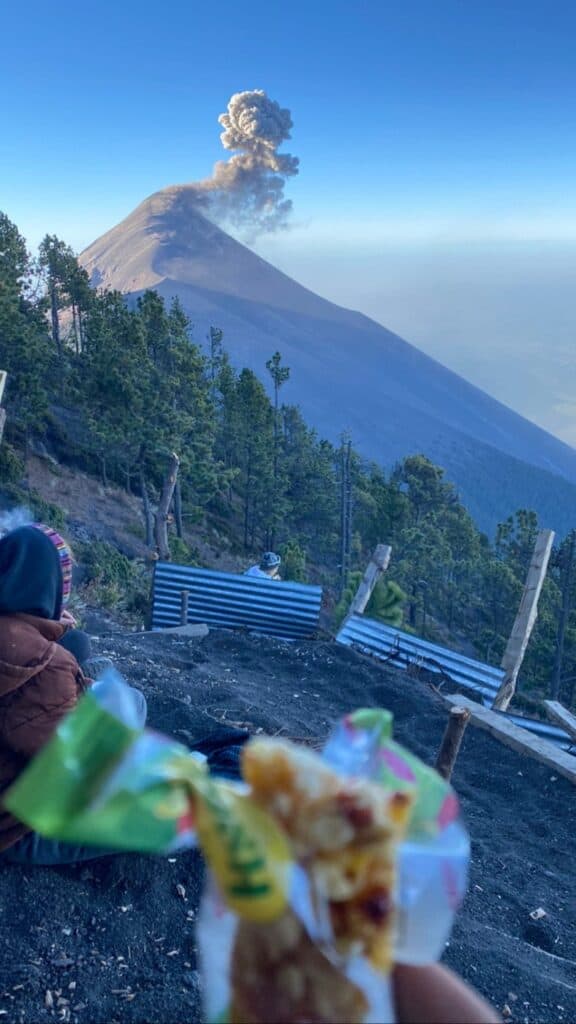
Base camp has a perfect view of Fuego Volcano, but the fog comes in throughout the day so you’re not always able to see it. Once we all arrived at basecamp between 3 PM and 4 PM, my group sat around and would cheer like we were watching a sports game every time the thick mist parted enough to see the volcano. Luckily, the fog/clouds are usually cyclical – so unless there’s truly terrible weather you should be able to see Fuego at least part of the time. We had a perfect view of Fuego for sunset and dinnertime. I didn’t anticipate how the altitude would make me feel, I wasn’t dizzy but everything I did was laborious – even just changing my base layers when I was freezing took so much effort I was just sitting in my tent freezing my bum off until they called us for dinner.
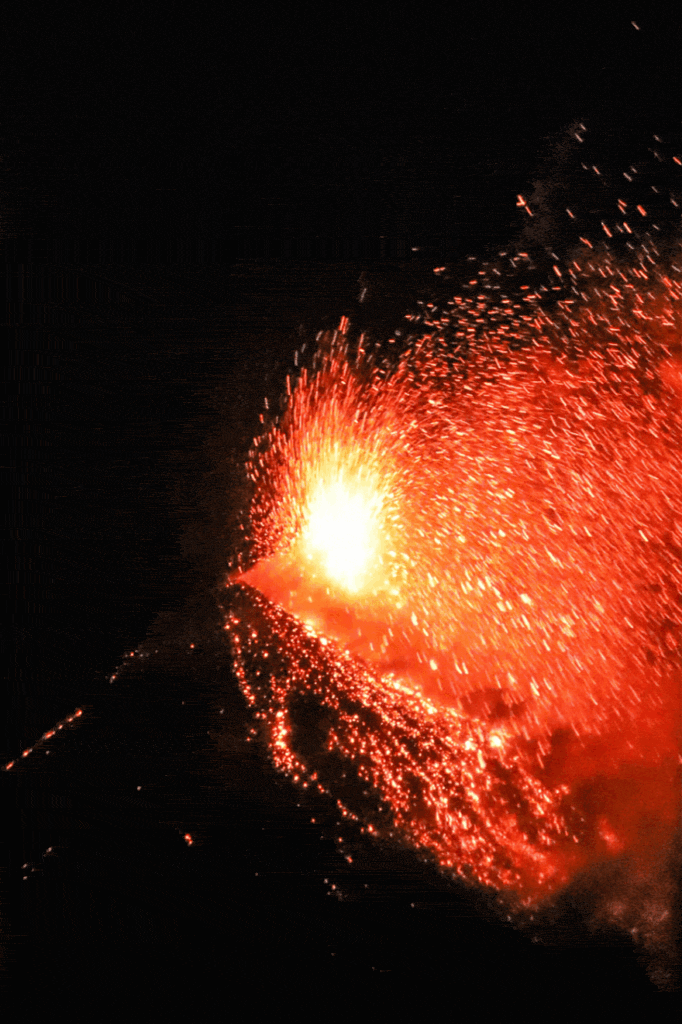
Fuego Erupting All Night
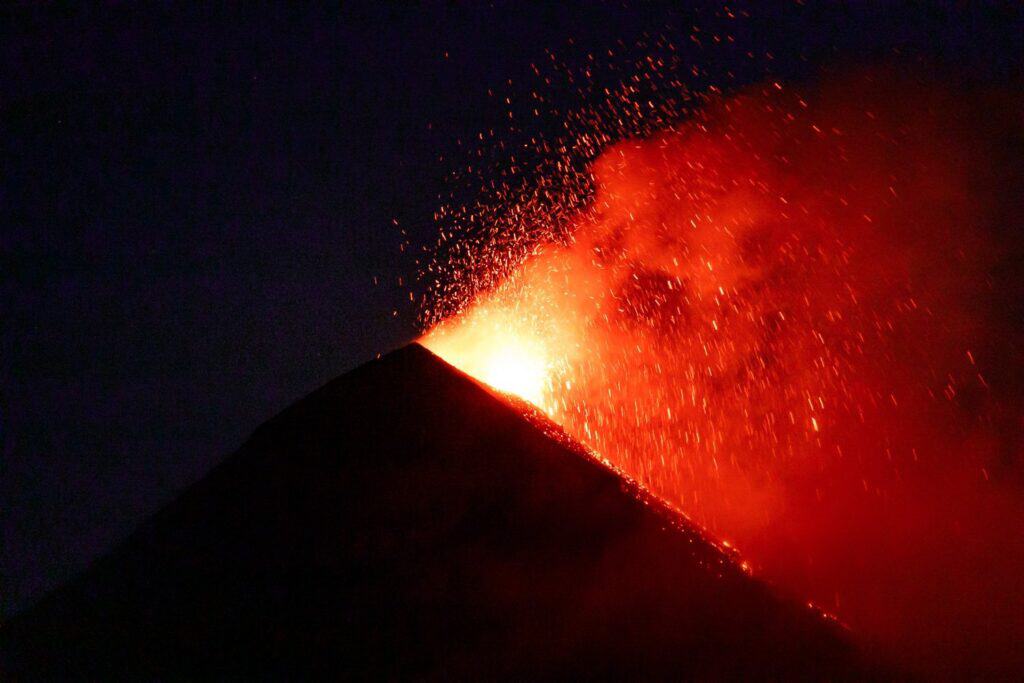
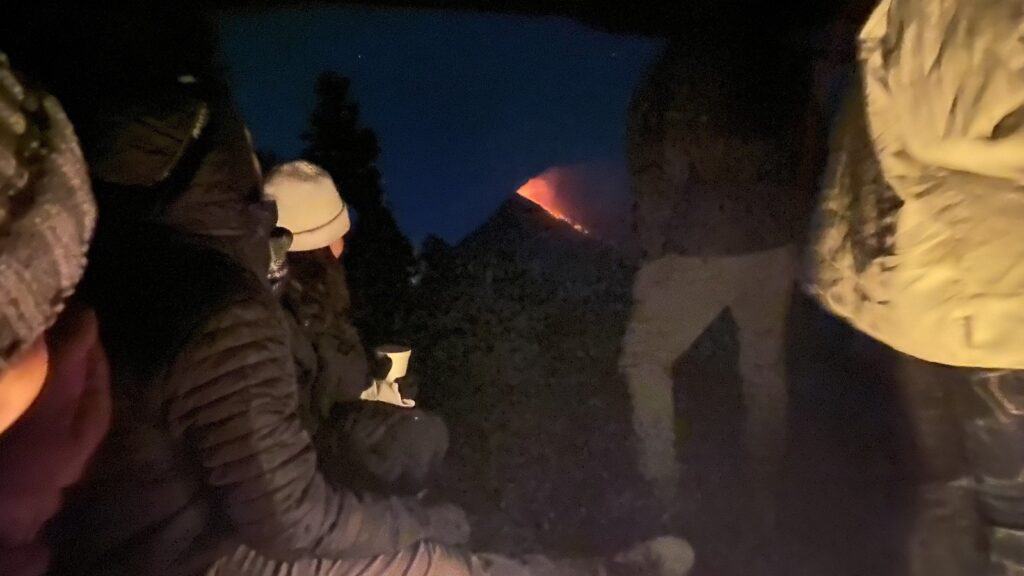
When I had last seen Fuego before trying to hide from the cold in my tent (which didn’t work) it was obscured by fog – so when I was called for dinner around 7 PM the view greeting me was insane. Volcan Fuego is constantly erupting and spewing lava, but you can’t see it in the daytime. Once the sun goes down every eruption is crystal clear.
I think the American public school education I received failed me a little bit in the volcano department. We learned about Pompeii and Tectonic Plates and all that extensively in school, and I was under the impression that a volcano erupting was a once in Millennium catastrophic event – so it was shocking to come to Guatemala and see one erupt every 15 minutes like clockwork! It was so frequent people stopped even looking up when it would erupt in dinner because we knew there would be another eruption in ten minutes.
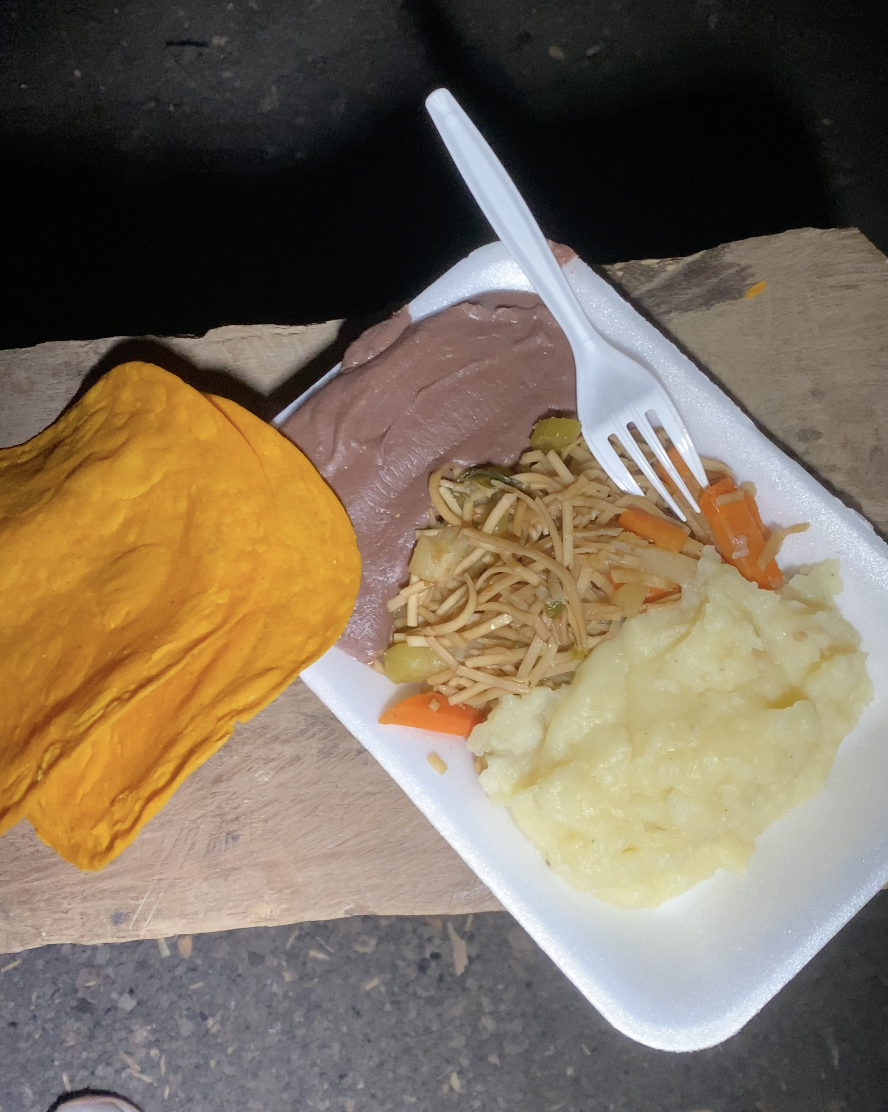
Dinner on the Mountain 🤢
The dinner was bad. No way to phrase that nicely. It was boiled mashed beans, mashed potatoes, and some kind of noodle stir fry. They don’t provide water but we were each given a cup of (gross) sugar-free powdered hot cocoa. The thing is, you can’t really complain about the quality of the food because they use porters to bring it up the mountain. For the amount of human labor involved, I was grateful to get food at all. Also, the altitude totally kills hunger.
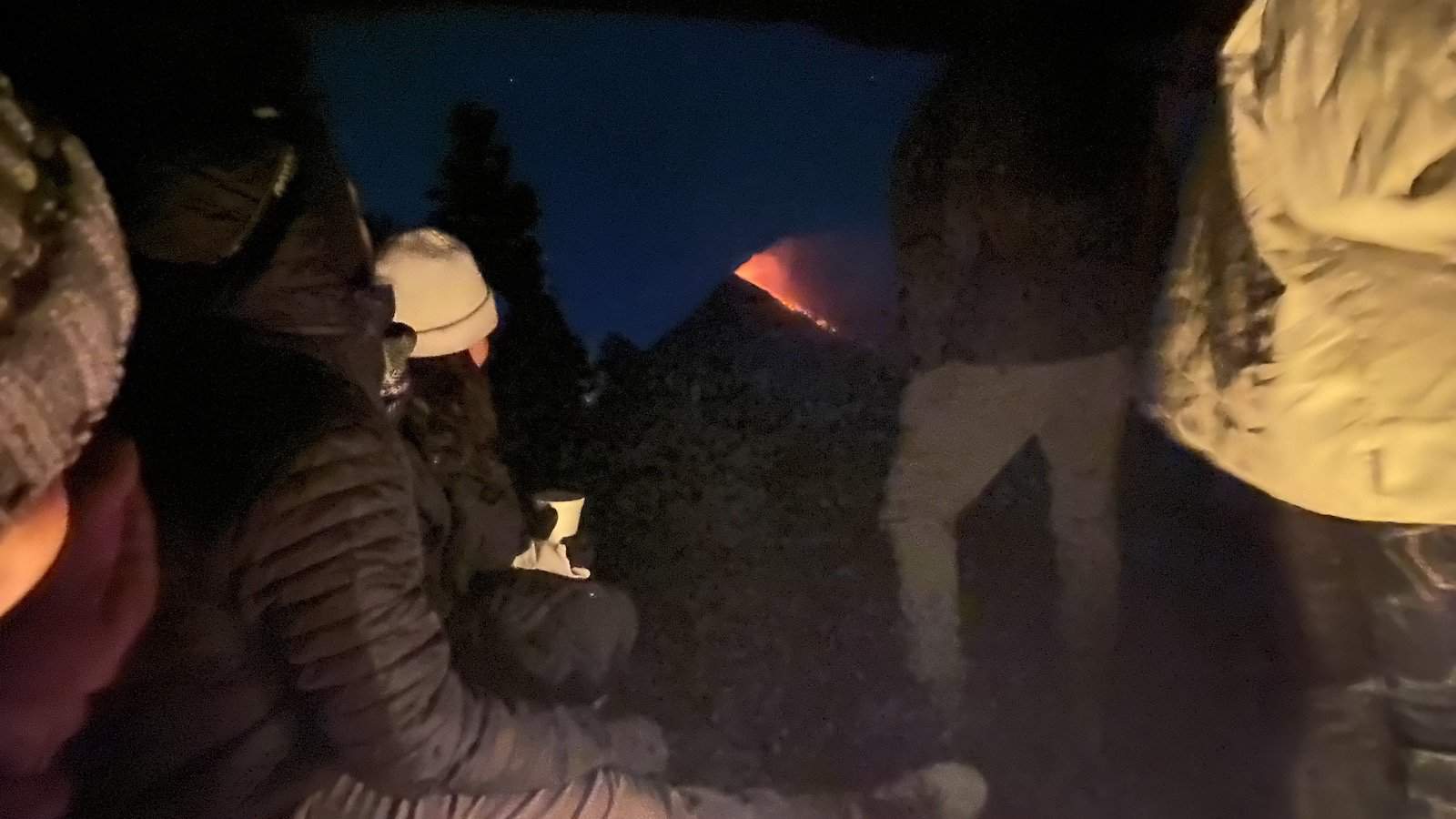
Hanging Out at Base Camp
We sat around a fire from 7 PM to 9 PM. A lot of people talk about the night, roasting marshmallows, drinking alcohol, and telling stories by the fire with the other hikers as the volcano erupts in the background, and that’s what it was like – minus the marshmallows and alcohol. I could tell the tour company was trying to create a “summer camp” aesthetic at their base camp, but it just didn’t work. Our guides were Guatemalans, and roasting marshmallows is kinda an American thing. They just handed everyone two marshmallows, no sticks, no roasting. For the alcohol, they took out a flask of some kinda flavored grain alcohol and halfheartedly tried to pass it around but it just wasn’t the vibe.
Eventually, I found some sticks that the guides had used to stir the hot cocoa but we only had two and no one wanted to share so my friend and I used one and another couple used a different one. The fire was warm and the view was stunning – the halfhearted attempt to get everyone to “roast marshmallows’ without sticks was just kind of funny.
We were a group of about 30 people, and at 5:30 PM 10 hikers left to hike Fuego Volcano, which was an add-on tour you had the option of doing for an additional 200 Q ($26). By the time we went to bed, right before 9 PM, they still weren’t back. I had a friend on that hike who said it was the hardest thing she had ever done. The Fuego hike also only uses one guide, so if someone isn’t as fit as the rest of the group they all had to go the same pace. She said it was incredibly intense, they were climbing rocks while going against intense winds while partially ascending Fuego. I want to come back to Guatemala one day and do both the add-on hikes, but my guide said that if you’re just going to do one – the sunrise hike on day two is a lot more beautiful and worth the effort than the night-hike to Fuego.
The base camp was pretty much what I expected, we were in a row of tents on a platform. All the tents were groups of 2,3 or 4 people – even with the tents being huddled together it was freezing at night! I went to bed in my gloves, puffer coat, outer coat, hat, two pairs of pants, and my scarf and I was still so cold.
DAY 2: Waking Up on the Volcano
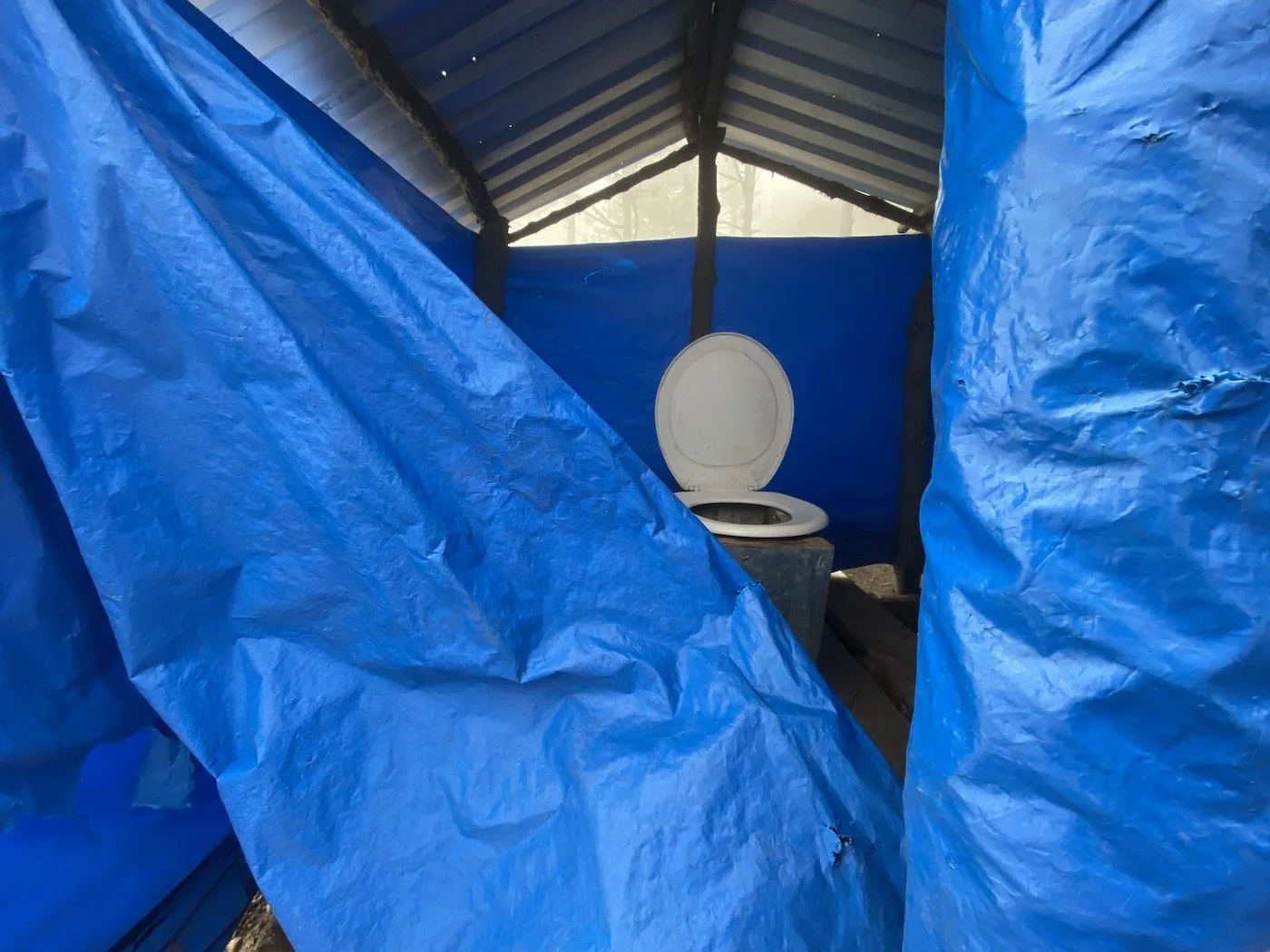
The altitude affects everyone differently. I had a really hard time getting to sleep, while my friend slept almost 12 hours! I woke up once in the middle of the night and had to use the restroom and couldn’t find it with my phone flashlight, and had to go back and get my headlamp. The tour company I took didn’t provide flashlights/headlamps or tell you that you need them, but you do!
The next time I woke up was 7 AM – I had slept right through the call to go on the sunrise hike at 5 AM. Apparently, a lot of people did, they don’t do a proper wake-up call – so if you want to do this hike in the future be sure to set your own alarm!
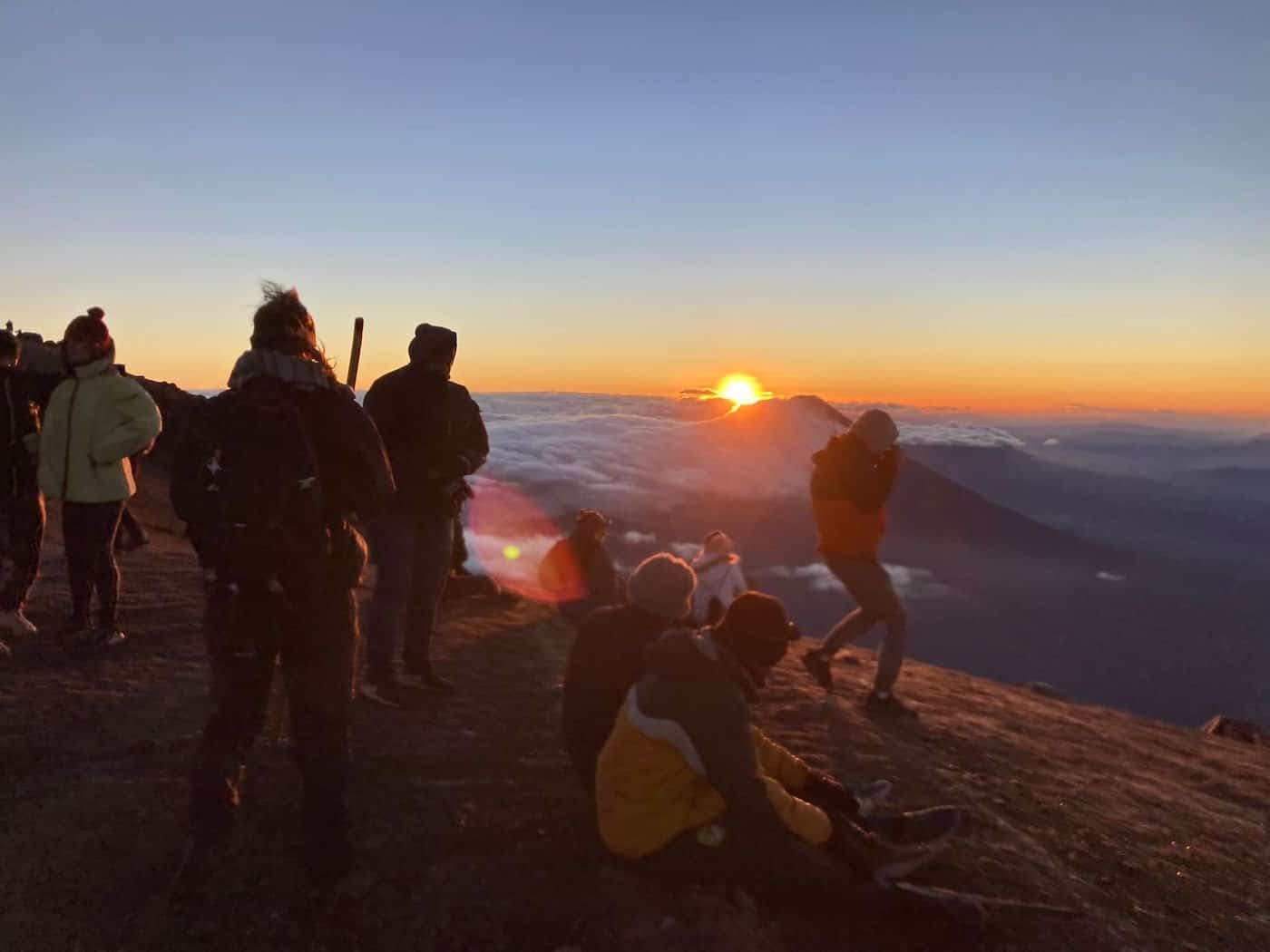
20 people from our group went on the sunrise hike where you can summit Acatenango. It’s a very hard hike, you’re going from 2,700 meters altitude to 4,000 meters in only one hour – so it’s basically straight up. My friend who went on it said 1/2 the people turned back before summiting because it was so windy and difficult. At the top, she said the wind makes you feel like you’re going to be blown off the mountain – but the views look gorgeous! I was super bummed to have missed out.
Around 7 AM there are calls for breakfasts, my friend completely slept through them because the guide’s wake-up calls get lost to the wind. The breakfast was actually SO GOOD! They make pancakes and give you hot tea – breakfast was my favorite meal. The altitude kinda kills your hunger and thirst drives to eat and drink but it’s important to force yourself so you’ll have energy for the hike ahead.
The Hike Down
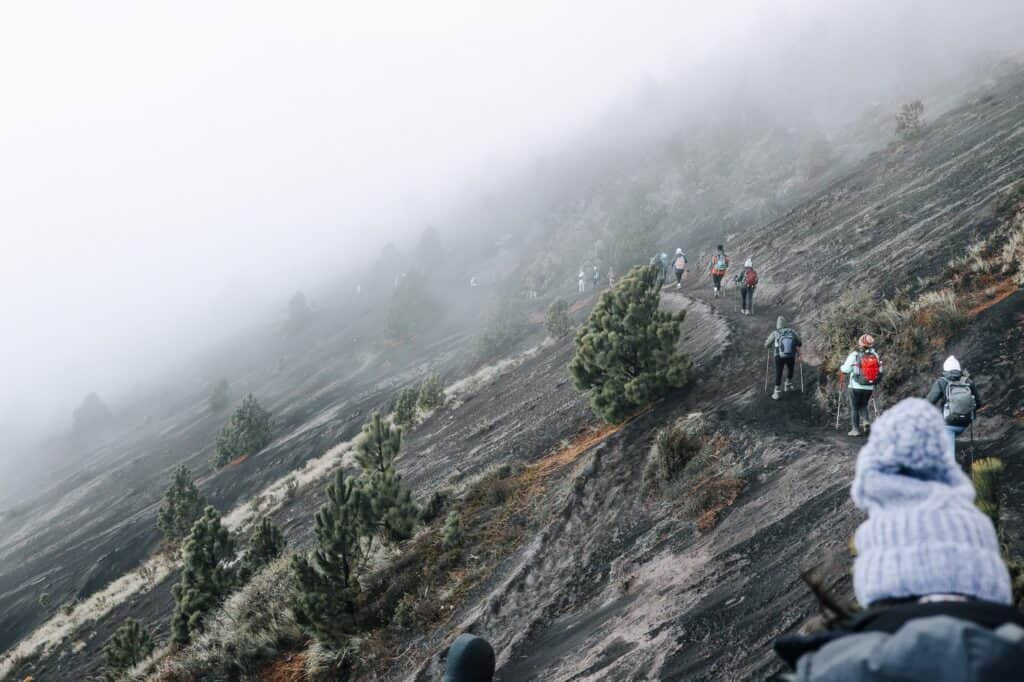
At promptly 8 AM we set off on the descent. The beginning is easy but it quickly got really slipper because you’re walking down a steep incline that’s often wet from the constant on/off fog and rain. Even with my stick, I fell SO many times on the way down. Everyone did, it’s unavoidable unless you take a horse. The ground is slippery and some parts are made of loose sand and gravel, so you just slide down. In Indonesia when I hiked Kawah Ijen some french students showed me the best way to deal with descending on slippery earth, running! It’s counter-intuitive but if you run down a steep and slippery incline your body weight sticks you to the earth a lot better than if you go slow and carefully. Even knowing that I fell a bunch – this hike was long and I didn’t have the energy to jog down the whole way 😅.
But finally, around 11:00, we arrived back at the bottom. The tour offered a celebratory beer once you finish but I couldn’t think of anything worse than a beer on an empty stomach after 3 hours of hiking. At 11:30 AM we started the trip back to Antigua; everyone in the van was filthy, stinky, and really really happy. Was it a perfect trip? No – but I absolutely love doing adventurous things like this, the volcano was one of the most amazing things I’ve ever seen in my life, and I’d do the hike again in a heartbeat.
Tip: This hike has a reputation as a “toenail stealer” 🤢. This is because the whole hike down is at an angle, so your toes are going to be hitting the tops of your shoes for 2-4 hours. Clipping your toenails as short as possible or wearing padded hiking socks can help you not lose yours!