Safety Tips for Swimming in Cenotes in Mexico

Wondering if Cenotes are safe? Cenotes are not only safe for swimming but they’re nature’s perfect swimming spots free from the dangers of the beach. In cenotes, there’s no current so you don’t have to worry about rip tides, waves, or boats while you swim. There are also no predators like sharks, large crocodiles, or even fish.
No two cenotes are alike and vary considerably in regard to safety. If you’re a non-swimmer or traveling with children, consider visiting an open-air Cenote, also called a Lagoon. These Lagoons are more shallow and also better lit than other cenotes. For added safety, you can also go to a more commercialized Cenote, like Cenote Oxman, which requires life vests for all visitors and has lifeguards on duty.
Safety Tips For Swimming Cenotes
- Wear water shoes!
- Open-air cenotes, also called Lagunas, are usually shallower
- Go to a commercialized cenote that has lifeguards and life-vests.
- Be careful not to swallow any cenote water
- Keep your eyes closed (or use goggles) when you put your head underwater

Are There Sharks In Cenotes?
Sharks only live in salt water, so you never have to worry about sharks while swimming in a cenote. The 2019 horror movie “49 Meters Down: Uncaged” popularized the idea that there are man-eating sharks in Cenotes. I’m happy to report that not only is this 100% false, but cenotes are all freshwater!

Are There Crocodiles In Cenotes?
In pretty much any body of fresh water in the Yucatan Peninsula, you’ll be able to find a croc, but they prefer large bodies of shallow water. Since cenotes are sinkholes that are usually small and deep, there’s not a large crocodile issue, since there’s nowhere for the crocs to bask in the sun. When there are crocodiles in cenotes, it’s usually well-known. For example, Casa Cenote has a small crocodile called “Panchito” which they consider a mascot.

Are Cenotes Safe For Non-Swimmers?
Yes! There are many cenotes near Cancun and Tulum that not only offer life vests but require them for all swimmers. Other cenotes like Laguna Kaan Luum are only a few feet deep and perfect for non-swimmers.
Some cenotes that offer life vests:
- Cenote Oxman
- Cenote Suytun
- Cenote Zaci
- Cenote Saamal


Are Cenotes Safe for Kids?
Not all cenotes are safe for kids. Open-air cenotes, called “Lagoons”, are safer for children as they tend to be shallower, and are more well-lit so you can see your children while they swim. Open-air cenotes also tend not to have jumping or diving platforms, which can be dangerous for children.
👉 Tip: I recommend taking a fantastic day trip to Akumal Lagoon, an open-air cenote that provides life vests, in addition to swimming with the turtles in Akumal.
Open-Air Cenotes Good for Kids
- Laguna Kaan Luum
- Casa Cenote
- Akumal Lagoon
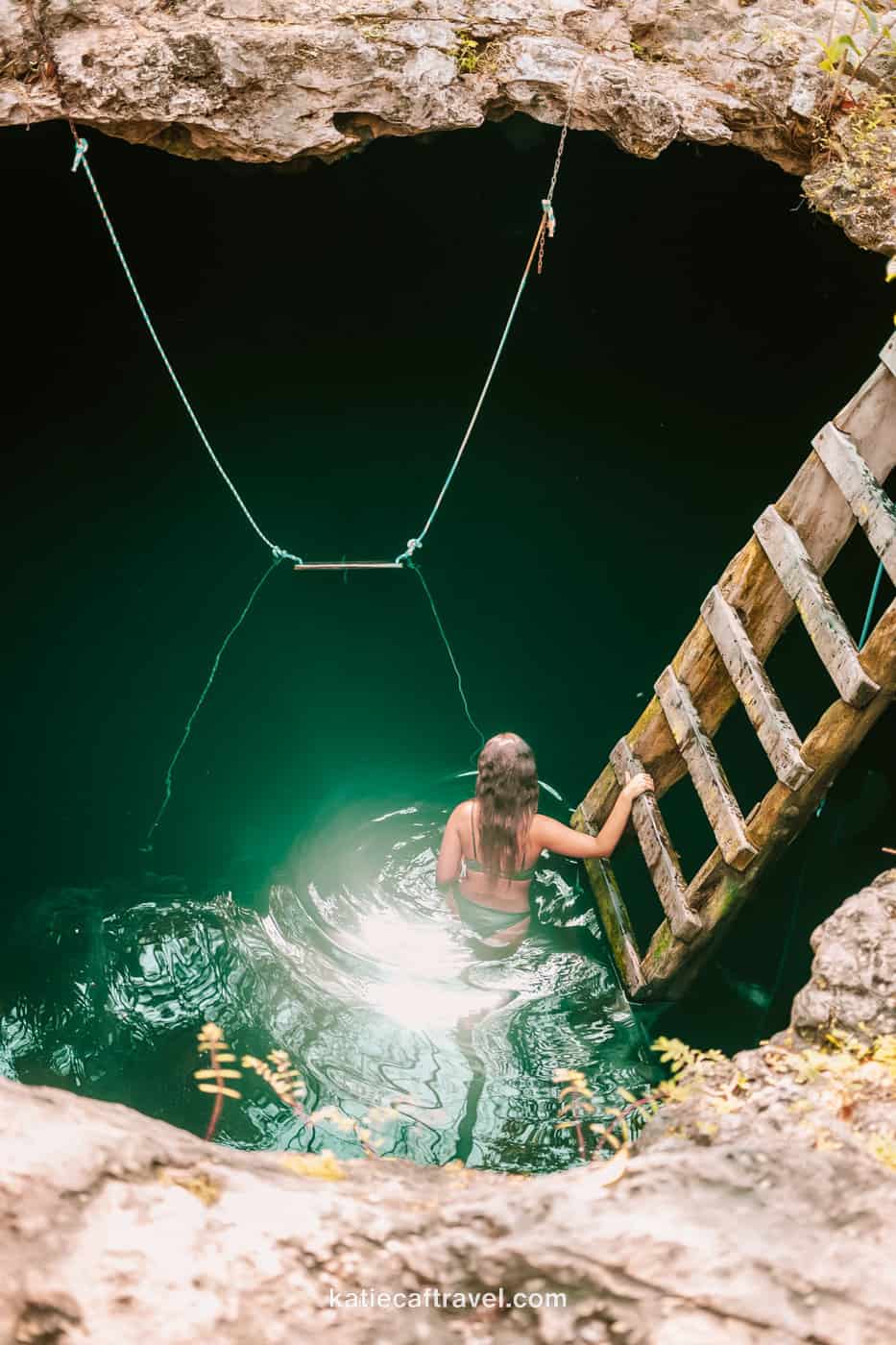
Is The Water Clean In Cenotes?
Cenotes are all connected to underground freshwater springs, which means cenote water should be crystal clear and some of the cleanest in the world. Unfortunately, over-tourism and pollution mean that’s not always the case.
Some Cenotes I visited, like Cenote Aldea Zama in Tulum, lived up to that pristine fresh-water spring reputation because it received fewer tourists. In some cenotes like Cenote Calavera, you’ll see an oily sheen on the top of the water, this is from the sunscreen from all the tourists washing off into the cenote water.
It’s important to always shower off before entering a cenote if you have any bug spray, lotion, or sunscreen on your skin to keep the cenote water clean. Most cenotes will offer showers for this reason, and some will require it to keep the cenote’s ecosystem safe from pollutants.

Can You Get Sick From Cenote Water?
Getting sick from cenote water is considered a bit of an urban legend, but every time you swim in fresh untreated (meaning unchlorinated) water you do run the very real risk of contracting Norovirus. Norovirus is a stomach bug that you can catch by swimming in contaminated water. In 2014 there was a whole lake in Oregon contaminated with the virus that got 70 people sick! There has never been a confirmed case of Norovirus associated with a cenote, but there are a lot of anecdotal stories online from people who swam in cenotes and got funny tummies in the following days.
There’s also the unlikely possibility of contracting Giardia, which is a parasite that affects the stomach when swimming in untreated freshwater. If you do catch Giardia, it can be cleared up with some anti-parasitic pills.
👉 Keep In Mind Many Things Can Make Tourists Sick: It’s important to remember that there are a lot of things in Mexico that can make tourists sick. For example, foreigners usually can’t drink tap water in Mexico. Sometimes the contaminated tap water is used to make ice in drinks and to wash fresh fruits and vegetables, and then tourists get sick from consuming things like fresh salads and smoothies. If you do swim in a cenote and wind up with a stomachache in the following days, it might be due to the ice in your drink rather than the cenote you visited!

Are Cenotes Cold?
It depends! Some cenotes like Casa Cenote and Laguna Kaan Luum are open-air cenotes that get lots of sunlight warming the water. Others like the Coba Cenotes, are almost 100% underground and get no sunlight heating up the water. Even in a 100% underground cenote, the water is a refreshing temperature to swim in after being out in the Mayan Riviera heat.

Just wanted to add, that Bull sharks can indeed live in fresh water for extended periods of time. Bull sharks can adjust salt and urea levels in their bodies to adjust to the water around them. There have even been Bull sharks that have lived in a freshwater pond for 17 years in Australia on a golf course.